Speed and accuracy can be critical when imaging transient astronomical events, artificial satellites, and space debris and when communicating with assets in space using infrared lasers.
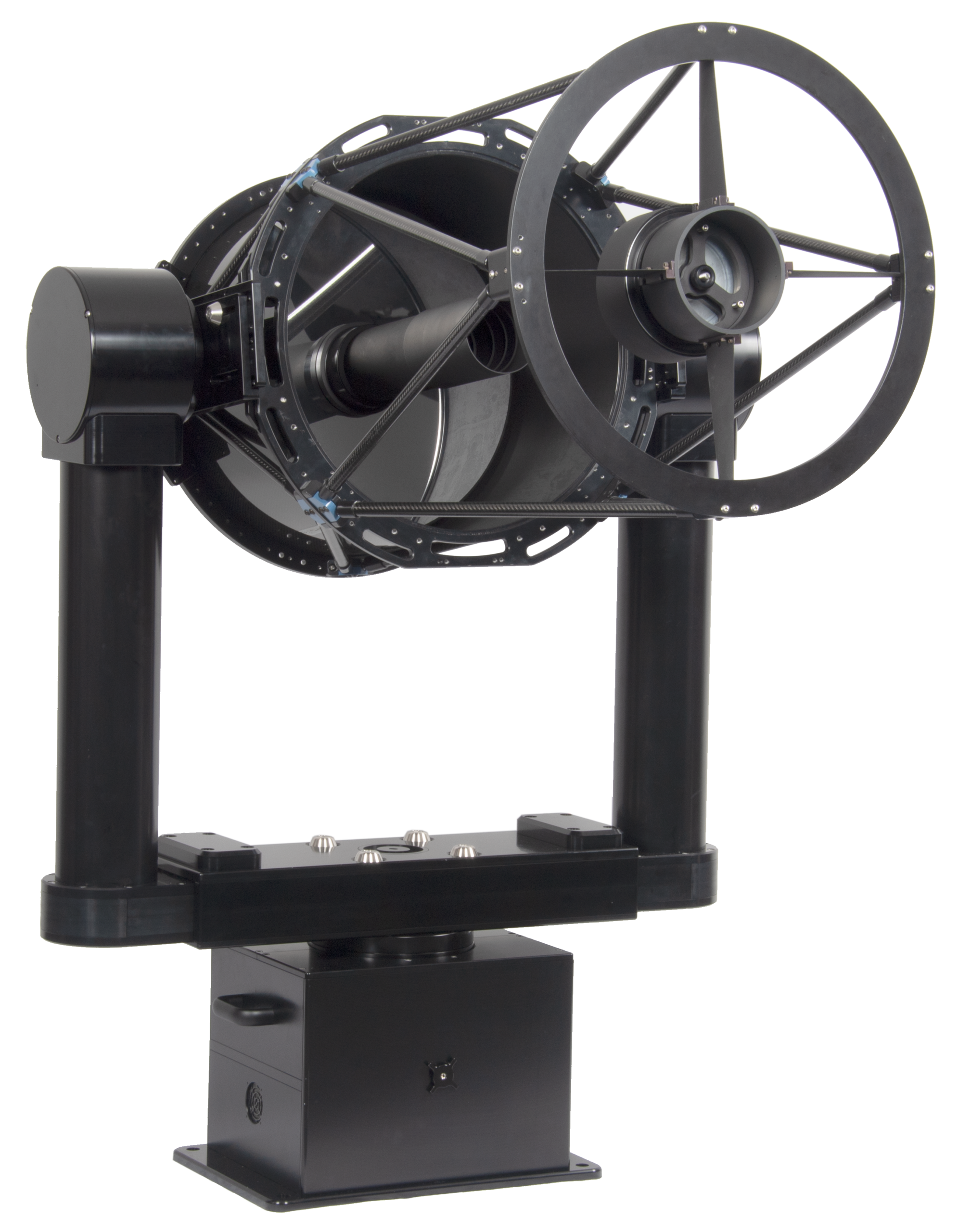
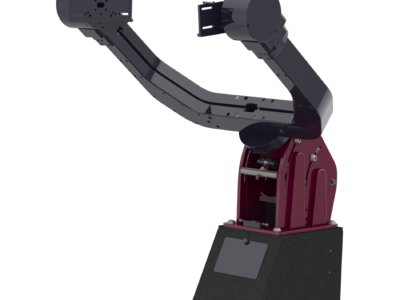
Apollo’s dual-tined fork provides extraordinary stability while its altazimuth design lets it operate in relatively tight spaces — without counterweights or the need for polar alignment.
Available in two models, the Apollo 600 shoulders up to 400 pounds (180 kg) while the Apollo 800 can accommodate payloads of up to 800 pounds (360 kg). They’re very quick to the target with slew speeds of up to sixty-degrees-per-second with the 600 and up to thirty-degrees-per-second with the 800.
What makes Apollo™ so extraordinary is its control software. After all, your instruments need to move into exactly the right position to acquire and then track your targets.
Apollo’s control-software integrates TPoint™ Professional and our advanced Telescope Control System Pointing Kernel (TCSpk™) to deliver extremely accurate pointing and tracking. Indeed, many of the world’s largest optical, infrared, and radio observatories rely on our software.
Paramount Apollo Robotic Mounts are equipped with TheSky™ Universal bundle and our Advanced Satellite Tracking module — all nicely integrated and with a consistent user-interface.
The software’s included license allows you to install and run it on up to six separate computers. You can also select among macOS, Windows, and the exceptionally stable Linux (ARM64 and x86_64 architectures). Why paint yourself into a corner?
Paramount Apollo’s are designed, manufactured, and assembled at our factory in Golden, Colorado. We use only high-grade metals which are then precision-machined.
Apollo’s high-torque, direct-drive motors and optional image rotator incorporate 26-bit absolute digital encoders for excellent performance in acquiring and tracking targets. As essentially off-the-shelf components, the direct drive motors enjoy long track records of proven reliability across multiple industries.
Whether your acquisition and tracking needs involve transient astronomical events, ground-based electro-optical deep space surveillance (GEODSS), laser communications (lasercom), or low-Earth satellites (LEO), Apollo might the perfect solution.
To learn more about the supremely capable Paramount Apollo, please review the Specifications tab below.
See the Specifications tab for additional product details.
If the off‐the‐shelf specifications do not meet your needs, please contact us (systems@bisque.com) so that we can help design a system that meets your specifications.
Designed, manufactured, and assembled in Golden, Colorado.
TheSky™ Space edition is compatible with macOS, Windows, and Linux operating systems, including ARM32, ARM64, and x86_64 architectures. All support platforms are included.
Direct Software Control
The Apollo can be directly controlled through its Ethernet connection (TCP/IP) by scripting TheSky™ Space edition, and/or using third-party tools based on Microsoft .NET®, C/C++ source code, Microsoft COM®, or MathWorks MATLAB®. Contact Software Bisque for details.
Maximum Slew Speeds
Generally, 30 degrees per second is a reasonable maximum limit with typical telescope loads.
Slew speeds are configurable up to a maximum 60 degrees per second if necessary.
Motor Controller
An industrial three-axis direct drive motor controller (10-20A, 20 kHz control algorithm rate).
A 120-220V AC 15A power supply unit is integrated within the mount base.
Computer to Mount Communication Interface
An Ethernet port is located on the mount base. TCP/IP protocol is used for communications with an external computer.
The motor controller also has two external serial ports.
On-Axis Absolute Encoders
5.9 in. (15 cm) diameter, 26-bit on-axis absolute encoders on the azimuth, altitude, and instrument rotator axes.
Components
320 lb. (145 kg) total mount weight is shipped in four separate components:
• Base: 115 lb. (52 kg)
• Fork center: 50 lb. (14 kg)
• Drive tine: 88 lb. (40 kg)
• Support tine: 62 lb. (28 kg)
Drive Tine Bearings
Primary bearing:
8 in.
(20 cm)
8 in.
(20 cm)
Secondary bearing:
5 in.
(12.5 cm)
5 in.
(12.5 cm)
Motor Torque Constant
8.7 Nm/Arms
13.1 Nm/Arms
Support Tine
3.9-in. (12.5 cm) self-aligning bearing with an integrated multi-axis telescope stress relief mechanism.
Azimuth Axis Bearings
Primary bearing size:
8 in.
(20 cm)
10 in. (25.4 cm)
Secondary bearing size:
5 in.
(12.5 cm)
6 in.
(15 cm)
Azimuth Axis Travel
540 degrees maximum rotation with spring-loaded stops at the limits of travel.
Altitude Axis Travel
0 – 90 degrees with spring dampened physical stops at end of travel.
Internal Brake
In the event of power loss, an integrated brake on the altitude axis stops rotation.
The azimuth axis does not employ a brake but has spring-dampened limits to gently stop rotation.
Slew Speed Range
Double-precision speed specification, driven by TheSky Space™ edition and the TPoint TCSpk™ pointing kernel.
Cabling
Cables required for mount operation and the controller are enclosed within the Apollo™ housing. A large access conduit through each fork accommodates custom instrument cables.
Cable Access Covers
Removable cable covers provide easy access to internal cabling.
Locking Pins
Both the altitude and azimuth axes can be locked in place to prevent rotation while mounting the telescope and other instrumentation.
Assembly Time
The four individual mount components can be fully assembled by a two-person team in about one hour.
Motor Torque
The continuous torque from the motors (not maximum torque) that is supplied to the altitude and azimuth axes.
65 Nm
103 Nm
Fork Width
The distance between the inside of both tines.
24 in.
(60 cm)*
24 – 28 in.
(60 – 75 cm)*
Fork Width Adjustments
High compression clamping mechanisms on both tines and the fork base allows the fork’s width to be adjusted to match the width of the telescope or instrumentation.
Fork Arm Length
Distance from the fork base to the center of telescope mounting.
28 in.
(70 cm)*
28-34 in.
(75-86 cm)*
* Custom height and width fork arms for non-standard payloads are available for an additional fee. Email FrontDesk@bisque.com for pricing and availability.
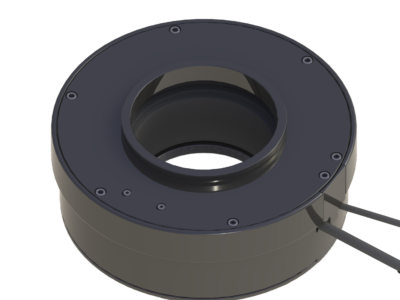
Optional Instrument Rotator
The optional Software Bisque direct-drive instrument rotator is the third axis on the direct-drive motor controller and plugs into the motor drive tine. TheSky and the TCSpk automatically corrects field rotation based on the telescope model.
Optional Telescope/OTA Attachment
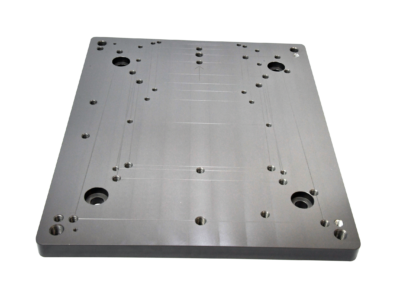
The optional Scope Rail System permits “drop-in” telescope mounting.
Operating Temperatures
The operating range for the mount’s control system is 0 – 40 degrees C.
• A built-in heater automatically turns when the ambient temperature drops below 5 degrees C and turns off when the temperature exceeds 10 degrees C.
• At higher temperatures, two built-in cooling fans can be turned on to cool the controller’s electronics.
Scope Rail System User Guide: Describes how to attach many commercial OTAs to the Paramount Apollo or Paramount Taurus direct drive mount.
Paramount Software Suite Quick Start Guide (PDF) While this document was primarily written for Paramount GEM mounts, it describes how to activate software included the software and register your serial numbers.
Paramount User Guide (GEM Models) While this document was primarily written for Paramount GEM mounts, it contains useful information about mount fundamentals, and how to operate all Paramount mounts from TheSky astronomy software.